
Learn about Why Walkie-Talkie is Half Duplex. Learn why walkie-talkies use half-duplex communication for simple, cost-effective, and interference-free messaging.
Introduction to Communication Modes
Communication entails the passing of information between a sender and a receiver through a specific medium. In contemporary electronics and telecommunication, equipment interacts through wires or wireless media, and the communication mode is critical to the effectiveness of the communication of information. Communication modes are of three major modes:
- Simplex – communication is in one direction.
- Half-Duplex – This is one-way communication where both directions are permitted, but at the same time.
- Full-Duplex – Communication flow is in both directions.
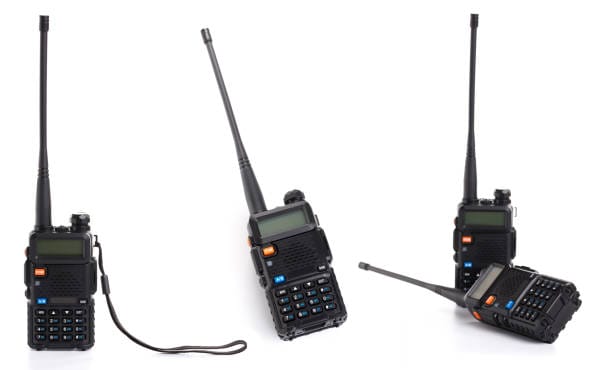
A traditional example of a half-duplex communication tool is the walkie-talkie. Walkie-talkie users have to speak in turns, unlike telephones, where both can speak at the same time (full-duplex).
What Is Half Duplex?
Half-duplex is one mode in which the flow of data is bidirectional, but only in a single direction. Devices are able to either transmit or receive, but not both. A classic example is walkie-talkies that have a push-to-talk button to allow the device to control the transmission and reception of messages.
How Half-Duplex Works?
In Half-duplex communication, there is a shared communication channel. The channel can only be used by one user to transmit data at a time, with another device receiving it. When the transmission has been full, the other party is allowed to respond.
An example of a walkie-talkie has a push-to-talk (PTT) button. The clicking of this button changes the device to transmit mode. The release of the button puts the button back into receive mode. Such a mechanism is used to guarantee the sharing of the channel between two users without interference.
Key Features of Half-Duplex Communication
- Alternating Transmission and Reception: Communication with devices involves taking turns to send and receive to avoid overlapping and neither to cause confusion nor interrupt effective and well-structured communication.
- Single Frequency Usage: It is a single radio frequency device that makes it easy to design, lowers the cost, and reduces the interference that can occur between the transmitting and receiving fields.
- PTT Mechanism: Sending and receiving are controlled, efficient through the use of PTT button to enable users to manually select which mode to use on a push-to-talk button.
- Reduced Complexity: Uses fewer elements and less power than full-duplex systems and making devices easier, cheaper, and consuming less energy.
Why Walkie-Talkie is Half Duplex?
Walkie-talkies can be used in half-duplex mode, whereby only one individual can talk at a given time as the rest listen. This avoids interference of signals and guarantees proper communication. To transmit and release it, the users press a push-to-talk button to facilitate conversations in an orderly manner and prevent overlapping messages.
Walkie-talkies use half-duplex mode for several reasons:
1. Simplicity of Design
Half-duplex communication makes the internal circuitry of walkie-talkies simple. It takes more components and complicated signal processing to design a device to transmit and receive at the same time (full-duplex).
2. Cost Efficiency
Half-duplex systems are cheaper to produce. The walkie-talkies have the possibility of being purchased in large numbers, particularly in companies, schools, or security forces, and therefore, it is necessary to ensure that the equipment remains affordable.
3. Power Conservation
Radio communication is very energy-consuming. Half-duplex mode ensures the power is not wasted since the device is either transmitting or receiving, not both. This is essential to devices that are portable and that have their own power, such as walkie-talkies.
4. Frequency Management
Half-duplex communication involves the use of the same frequency at both the sending and receiving ends, hence less spectrum is utilized. Full-duplex systems would necessitate different frequencies for sending and receiving, which may create congestion of frequencies and regulatory issues.
5. Prevention of Interference
Half-duplex mode is used to make sure that signals do not interfere. Concurrent transmissions may cause echoes, signal collisions, or crosstalk advisable in short-range, low-power devices such as walkie-talkies, in full-duplex mode.
Technical Reasoning Behind Half-Duplex
- Shared Frequency Channel: Walkie-talkies share a single frequency channel, alternating between transmit and receive, and hence simultaneous communication cannot occur unless more channels are shared.
- Simple and Cost-Effective Design: Half-duplex minimizes circuitry complexity, power consumption, and cost. Full-duplex uses two transceivers, which add to the sizecostst b battery life of devices.
- Preventing Interference: This would cause interference to signals in case of transmission and reception at the same frequency. Half-duplex does not do this, and there is no discontinuous communication between users.
- Battery Efficiency: Half-duplex uses less energy because only during speaking, the transmitter is active. Full-duplex consumes more energy as it is transmitted and received simultaneously.
- Push-to-Talk Mechanism: Half-duplex is inherent with the usage of the PTT button: a press transmits, a release receives. This plain interface goes well with one channel, in alternating communication.
Comparison Between Half-Duplex and Full-Duplex
| Feature | Half-Duplex (Walkie-Talkie) | Full-Duplex (Telephone) |
| Communication | One wayyy at a time | Simultaneous in both directions |
| Hardware Complexity | Simple | Complex |
| Cost | Low | High |
| Power Consumption | Low | High |
| User Experience | Requires turn-taking | Natural conversation |
| Frequency Requirement | Single frequency | Two separate frequencies are needed |
Use Cases of Half-Duplex Walkie-Talkies
Half-duplex walkie-talkies are used in a variety of fields:
- Outdoor Uses: Hikers, campers, and adventurers make use of half-duplex walkie-talkies to connect instantly with each other even in isolated locations, and maintain security and coordination without relying on mobile networks.
- Emergency Services: Half-duplex walkie-talkies are utilized by police, firefighters, as well as paramedics to ensure effective coordination of emergency responses so that in case of emergency, they can easily and clearly communicate within a minute or two when time is of the essence.
- Construction Sites: Construction workers use the rugged half-duplex walkie-talkies to converse over the construction sites in order to coordinate their work, maintain safety standards, and ensure continuous workflow in spite of the tough weather.
- Events Management: Half-duplex walkie-talkies are used by the staff in large festivals, concerts, or conferences to be in instant communication, which allows smooth operations, quick problem-solving, and efficient coordination of various teams.
- Military Applications: The military uses half-duplex walkie-talkies to maintain secure and instant communication throughout the opoperationproviding effective coordination in the field and reducing signal jamming and tactical inefficiency.
Conclusion
Walkie-talkies are based on half-duplex communications to ensure clear-cut, interference-free communication. This design is easy to use in hardware, low power, frequency management, and cost reduction, and is based on push-to-talk, which makes it convenient, dependable, and successful in short-range and portable communications.