
Learn about What Walkie‑Talkies Do Schools Use. Discover what walkie-talkies schools use for safety, coordination, and emergency communication across campuses efficiently.
Introduction
In contemporary schools, clear and instant communication is highly important to the safety, the coordination, and the day-to-day functioning. The school walkie-talkie is one of the best equipment to do this. These gadgets enable employees to contact each other promptly, coordinate, and react to emergencies without using a cellular network that can be untrustworthy or congested.
What Are School Walkie Talkies?
School walkie-talkies will be two-way radios that will be used to facilitate real-time communication between the various members of staff within the school premises. Walkie-talkies have radio frequencies unlike mobile phones, which depend on cellular networks and hence can be used in areas where mobile networks are weak or not accessible. They are commonly applied in daily organization and emergencies.
Benefits of using School Walkie Talkies?
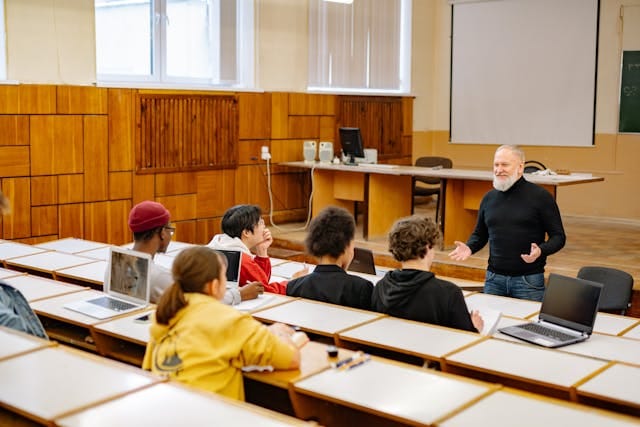
Walkie-talkies in schools are fully instantaneous, more secure, and increase coordination among teachers and other staff. They help in emergency alerts, facilitate daily operations, minimize dependence on mobile networks, and are economical. They are durable and easy to handle, so they guarantee effective communication whenever in classrooms, in playgrounds, and at campus events, keeping students and staff safe.
What Walkie‑Talkies Do Schools Use?
Walkie‑Talkies Often Used in Schools
1. Quansheng TG330 Walkie Talkie
Quansheng TG330 is a reliable and affordable walking talkie used in schools to communicate on a daily basis. Its user-friendly design, better range, and extended battery life allow it to be used by staff members in case of emergencies and by playground supervisors.
2. Amherst A66 Walkie Talkie Radio
The Amherst A66 is a small, handheld, and simple to utilize walkie-talkie that is preferred by schools with small campuses. It is light and economical, giving good audio quality for regular coordination among teachers, security staff, and also in the maintenance staff over a short distance.
3. Kirisun DP405 Walkie Talkie Radio
Kirisun DP405 is a professional-grade digital radio, and it is popular in larger schools. Its excellent sound quality, robust construction, and multi-channel feature are suitable for the complex campus communication, event, and emergency coordination of various staff teams.
4. Entel DX482 Walkie Talkie Radio
Entel DX482 provides an excellent performance for the schools that need dependable communication in tedium of large campuses. Having an increased range, high-quality sound, and durable design, security staff, coordinating staff, and emergency preparedness strategies are effectively supported.
5. Entel DX485 Walkie Talkie Radio
The Entel DX485 is a more advanced model that can be used in schools that have a high demand for communication. Its digital and analogue features, robust design, and prolonged battery life make the seamless coordination of activities throughout the school hours and outdoor activities without any hitches.
6. Lynx PT400 Walkie Talkie Radio
Lynx PT400 is a radio that is user-friendly and is designed with durability, which is preferred by schools to use in daily communication with the staff. It has a robust coverage, easy-to-use push-to-talk features, and a portable nature, which makes it perfect in classrooms, even on the playgrounds, or in times of emergency.
Critical factors to consider before choosing a walkie-talkie for School
Range/coverage – Ability to penetrate classes and vehicles
The walkie-talkie should be able to offer good coverage in all the classrooms, hallways, playgrounds, and vehicles without any interruption in communication, even through walls, doors, and other hindrances around the school campus.
Battery type to sustain movement around the school
Select a battery with a capacity to last the entire school day, rechargeable or replaceable, to ensure that staff members are free to move around without the fear of battery drainage during lessons, supervision at the playground, or school activities.
Number of handsets for teachers and non-teaching staff
Make sure that there are enough walkie-talkies and all the concerned personnel, such as teaching, administrative, security, and maintenance personnel, can walkie talk and not have to share walkie-talkies, and hence result in delays in communication.
Design for convenience during movement around the school
The walkie-talkie must be mobile, ergonomic, and portable, so that the staff can move around the corridors, playgrounds, and hallways without any problem and ensure good communication.
Good signal/frequency to facilitate uninterrupted communication
Choose radios that have a powerful signal strength and an appropriate frequency to reduce the interference, dropout, or background noise, which makes communication between personnel on the entire campus of the university smooth, continuous, and reliable.
Build quality for sustainability in schools.
Radios should be able to endure the daily wear and tear, accidental drops, outdoor environment,,s as well as frequent manipulations of various staff members to guarantee both long life and good performance in a busy and active school environment.
Usability
The walkie-talkies must have simple features, good audio, and easy-to-use features to ensure that all the staff who are engaged in using the walkie-talkies can communicate effectively and fast without the need to go through long training or complicated software programs.
How Schools Use Walkie Talkies
Walkie-talkie use in schools cuts across several places, which makes the use of these gadgets safe, efficient, and better coordinated.
1. Safety and Security
Walkie-talkies play a very important role in guaranteeing the safety of the students and staff. They are used by security personnel to patrol the entrances, report incidents, and coordinate responses. The communication can be conducted in real time across the campus, and this can save lives in case of an emergency, such as lockdowns or fires.
2. Classroom Coordination
Minimal disruptions can be experienced as teachers and administrative staff are able to communicate with each other without leaving the classes. As an illustration, a teacher can seek any help regarding classroom management problems or report any cases to the office promptly.
3. Event Management
Walkie-talkies can be used during school activities like sports days, cultural programs, or field trips to coordinate activities, control crowds, and respond to issues instantly.
4. Maintenance and Logistics
Radios allow the coordination of activities of janitorial staff, maintenance, and delivery staffWalkie-talkieses are used to guarantee that the process of handling maintenance requests is done promptly and the resources are used effectively.
5. Student Supervision
Walkie-talkies can be used on playgrounds, recess, field trips, or anywhere the staff needs to keep an eye on the students and address any emergencies, as well as make sure that rules are consistently followed.
Best Practices for Using Walkie Talkies in Schools
The use of walkie-talkies in a school setting would need a plan and good procedures to maximize efficacy.
1. Assign Specific Channels
There should be channels for each department name: teachers, security, administration maintenance. This eliminates cross-talk and makes sure that the messages reach the appropriate audience.
2. Regularly Charge Devices
The walkie-talkies are to be charged either on a daily basis or before use in events. The schools have to have emergency spares of batteries.
3. Test Range and Signal
Before the installation of radios, schools are advised to make a test covering of the whole campus, including classrooms, playgrounds, gyms, and even the parking lots.
4. Train Staff
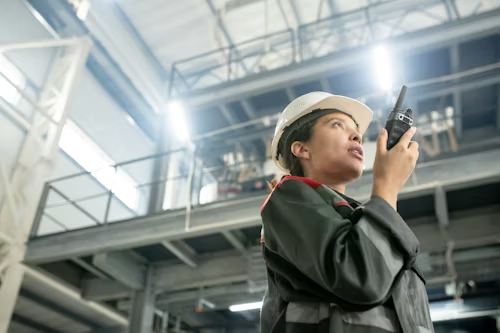
It should be trained to all users on how to use it properly, as well as push-to-talk etiquette, emergency procedures, and channel selection.
5. Maintain and Inspect Devices
Frequent damage checks, battery life checks, and signal interference checks make the devices useful and able to withstand time.
6. Use Clear and Concise Communication
Employees are encouraged not to engage in unnecessary talk but instead employ standardized codes or phrases so as to ensure sanity and effectiveness in communication.
7. Implement Emergency Protocols
Walkie-talkies should be part of the emergency plans of schools. The employees should be aware of the avenues of alerts, lockdown, or evacuation.
Conclusion
Walkie-talkies in school are necessary to have instant communication that is more reliable. They promote safety, facilitate day-to-day activities, and emergency preparedness. By choosing the use of durable and easy-to-use radios with sufficient range and appropriate protocols, schools will be guaranteed of efficient coordination, protecting the staff and the students on the campuses.