
Learn about Does Walkie-Talkie Work Without WiFi or Net Connection. Learn how they function, their types, benefits, and best offline uses.
A handheld communication device that enables two or more individuals to interact in real time through radio waves is called a walkie-talkie (two-way radio or handheld radio). It does not depend on any network provider, SIM card, WiFi, or internet connection.
It contains:
- A microphone (you speak into it)
- A speaker (you hear others)
- A transmitter (sends your voice)
- A receiver (gets other voices)
- An antenna
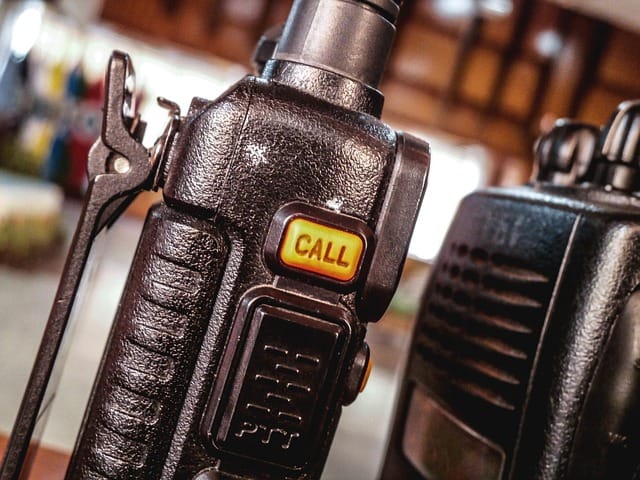
- A push-to-talk (PTT) button
Your voice is sent over a radio frequency when you press the PTT button, and your voice is broadcast by the walkie-talkie. It can be heard at once by anybody who is within range and is on the same frequency.
This technology is not complicated and yet very efficient, and that is the reason why walkie-talkies are being used to date decades after their invention.
Does Walkie-Talkie Work Without WiFi or Net Connection?
Walkie-talkies do not require WiFi or net connection. Their communication is direct between devices using radio frequencies; hence, there is no need for an internet or a cellular network. So long as the two units are within a range, they can send and receive voice signals immediately. This renders walkie-talkies useful in emergencies and outdoor activities, as well as where connectivity is not available.
Types of Walkie-Talkies That Work Without WiFi
1. FRS (Family Radio Service)
FRS walkie-talkies are used in families, homes, and for recreational purposes. They provide easy, free-of-license communication in an area of 0.5- 2 miles based on the nature of the terrain, buildings, and obstacles.
2. GMRS (General Mobile Radio Service)
GRMS walkie-talkies have more powerful operation and longer range up to 5-25 miles. They are perfect for outdoor adventures, emergencies, and rural usage, but most countries require a communication license to be issued before a user can use them.
3. UHF and VHF Radios
UHF as well as VHF radios are used in businesses, hotels, security teams, and construction sites. UHF can work in the indoor setting where there are walls and interference, whereas VHF can provide them with h greater range in the open space of the environment and a broader area.
How Walkie-Talkies Work Without WiFi
The conventional walkie-talkies do not use an internet signal to transmit and receive voice messages. Your device sends your voice as radio signals and sends them to other walkie-talkies transmitting on the same frequency or channel when you press the Push-to-Talk (PTT) button.
These are signals that go directly across the air between one device and another; that is, they do not rely on:
- WiFi routers
- Cellular towers
- Internet connections
- Satellite services
This also renders walkie-talkies a viable offline communication tool, ideal in case of emergency and isolated areas.
Situations Where Walkie-Talkies Work Best Without WiFi
✔ Mountains and hiking trails
Mobile signals become dead in remote mountains or long hiking trails that are long. Walkie-talkies provide reliable, face-to-face communication to enable groups to be in touch, update on progress, and keep safe over difficult terrain.
✔ Camping and outdoor adventures
In camping, hunting, or exploration of the wilderness, people cannot access internet services. Walkie-talkies enable campers to stay in touch with each other, coordinate their activities, and be safe even in the expansive forested areas or rough outdoor locations.
✔ Construction sites
The construction sites are hectic, noisy, and usually without stable internet. Through walkie-talkies, workers can also pass instructions fast, enhance communication, increase security, and ensure a healthy workflow without relying on WiFi or cell networks.
✔ Security teams at events
Concert, mall, or other publicity security personnel require quick communication. Walkie-talkies provide the teams with the ability to organize the crowd control, react to events, and exchange real-time information immediately without using the networks that are unreliable and overloaded networks.
✔ Emergency response
The communication networks go down during a disaster such as storms, earthquakes, or power outages. Walkie-talkies provide a way to maintain contact among the responders to allow the coordination of rescue, status checks, and life-saving information when internet and phone networks fail.
Disadvantages of Walkie-Talkies
1. Limited Range
Walkie-talkies have a restricted ability to communicate over short to moderate distances. Their coverage is much lower in urban, forested, or hilly regions, and thus, they are not as useful in long-range communication as mobile networks.
2. Signal Obstruction
Radio signals can be distorted or attenuated by buildings, mountains, trees, and even weather. This interference not only decreases clarity but also creates static, and in some cases, cannot pass the messages to other users in the same channel.
3. One-at-a-Time Talking
The walkie-talkies employ the push-to-talk technology, whereby only one individual is allowed to talk simultaneously. This restricts the natural flow of conversation and is likely to create communication delay in a fast-paced or emergency scenario.
4. No GPS or Location Sharing
Hardly any walkie-talkies have GPS or location-tracking capabilities. Users are not able to share precise positions, which makes it more difficult to navigate, find teammates, or control large groups in new locations or distant places.
Walkie-Talkies vs WiFi-Based Apps
| Feature | Traditional Walkie-Talkies | WiFi Walkie-Talkie Apps |
| Requires WiFi? | ❌ No | ✔ Yes |
| Works during emergencies | ✔ Yes | ❌ No if no WiFi/data |
| Range | Limited (1–30 miles) | Unlimited (internet-based) |
| Cost | One-time purchase | Data/WiFi cost |
| Reliability | Very high | Depends on the network |
| Suitable for outdoor/off-grid | ✔ Yes | ❌ No |
Why Choose Offline Walkie-Talkies?
1. Reliable in Emergencies
Offline walkie-talkies will remain active in times of storms, earthquakes, power outages, and network failures. The fact that they are independent radio signals means that they are vital in the search and rescue operations,, ns as well as in disaster preparedness and emergency coordination when other communication systems are down.
2. No Monthly Charges
Walkie-talkies do not need WiFi, SIM cards, or data plans, which eliminates recurrent costs. After buying, they offer free communication to the fullest extent, which is economical to families, teams, outdoor groups, and long-term emergency preparedness.
3. Simple Push-to-Talk Function.
Communication is immediate and painless with one push of to talk button. There are no apps, accounts, or menu features needed, and walkie-talkies are simple to use by children, those who are inexperienced, professionals, and emergency teams that need to communicate quickly and in a practical manner.
4. Secure and Private
Conventional radios are direct without servers and applications,, decreases the chances of hacking and leakage of data. There are also many professional walkie-talkies with encryption, which provide confidential and secure communication to security teams, companies, and sensitive field work.
5. Perfect for Outdoor Activities
The walkie-talkies are known to perform better in the outdoors, where phones fail to pick up. The favorite devices used during hiking, camping, skiing, hunting, fishing, and adventure trips are favored because they offer reliable offline communications throughout forests, mountains, trails, and even the remote wilderness.
When Do You Need WiFi for a Walkie-Talkie?
Only when you’re using:
- Walkie-talkie smartphone apps.
- Smartwatch PTT features
- Radio systems that are connected to the Internet.
- WiFi-based intercoms
Pros and Cons of Walkie-Talkies Without WiFi
✔ Pros
- Anywhere, wherever there is no network
- No cost for WiFi or mobile data
- Communication in a flash
- Battery life that lasts long
- Tough and dependable
- Great for urgent situations
- Handy for places like nature and far-off areas
❌ Cons
- Short distance
- Sound is not as good as with mobile phones
- There might be too many users on some channels
- Licenses are required for some
- No message history or recording unless using high-end models
Conclusion
Walkie-talkies do not need WiFi since they can use direct radio signals and not an internet network. Their simplicity, reliability, as well as offline nature make them very important in case of emergencies, outdoor events, construction sites, and security operations. They are still among the most reliable media of communication in areas of lack of connectivity.