
Learn about Do Walkie Talkies Work Without Cell Service. Walkie-talkies work without cell service using radio frequencies. Learn how they provide reliable, instant communication anywhere.
What Are Walkie Talkies and How Do They Work?
Walkie-talkies (two-way radios) are handheld gadgets that transmit and receive voice messages via radio frequencies and not mobile networks. They operate by passing radio waves directly between one device to another, hence they can be used where cell services are indeed weak or inaccessible.
How They Work:
- They also use VHF (Very High Frequency) or UHF (Ultra High Frequency) radio bands to transmit.
- The voice gets converted to radio waves when you push-to-talk (PTT) button is pressed.
- The signal can be received by other radios with the same channel and privacy code instantly.
- It does not need any SIM card, any Wi-Fi, or any cell towers.
Do Walkie Talkies Work Without Cell Service?
The use of Walkie-talkies is not restricted by the existence of cell service, as it operates through the use of radio frequencies and not mobile networks. The communication between two devices is instant, provided that they are on the same channel and they are in range. This renders the walkie-talkies useful when it comes to emergencies, outdoor activities, out of range, and locations where there are no cellular signals.
Types of Walkie-Talkies That Work Without Cell Service
1. FRS/GMRS Radios
FRS and GMRS walkie-talkies are powered by UHF radio frequency, which is not dependent on cell networks. They provide short- to mid-range communication, which is reliable, and thus they are applicable in families, hiking, events, and simple emergencies.
2. Long-Range HAM Radios
The HAM radios offer long-range communication, and that too with great power, not depending on cellular service. With repeaters, licensed operators can travel miles, and this is important during emergencies, off-grid exploration, as well as when in need of reliable and far-range radio contact.
How Walkie Talkies Work Without Cell Service
Walkie-talkies are not dependent on cellular networks. Their working mechanism can be divided into the following parts:
1. Radio Frequency Communication
Walkie-talkies are voice transmitters that utilize radio waves. The voice is used in a walkie-talkie through conversion into an electrical signal, which is further relayed in the form of a radio wave. The walkie-talkie that receives transforms the radio wave once again into sound.
2. Line-of-Sight Transmission
Walkie-talkies usually can be used on a VHF (Very High Frequency) or UHF (Ultra High Frequency) spectrum. The transmission is usually in a straight line between the devices. The range can be decreased by obstacles such as hills, buildings, or heavy forests.
3. No Internet or Cell Required
Walkie-talkies are radio frequency-based, which means that they do not need cell towers, Wi-Fi, or cellular data. This renders them highly applicable in remote locations or when a disaster strikes and the cell networks are down.
Benefits of Walkie-Talkies in No-Service Zones
Smartphones fail where Walkie-talkies prosper. Their benefits are most evident in the case of the collapse or unavailability of infrastructure.
✔ Unshaken Reliability
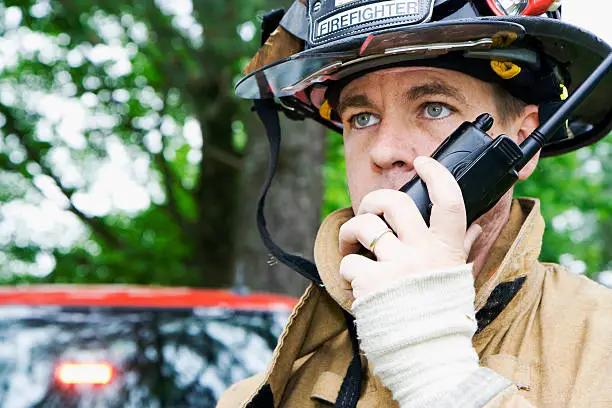
Even in cases where the cell towers were ruined due to natural disasters, walkie-talkies remain functional. Their direct radio communication also means that teams will remain in touch during emergencies, isolated locations, or blackout without having to use the unreliable network infrastructure.
✔ No Network Congestion
Cellular networks tend to slow down and tangle when there are a large number of users or during times of emergency. This is not the case with walkie-talkies since radio waves do not congest, hence the communication is immediate and effective, no matter the number of individuals in the area.
✔ No Monthly Charges or Data Plans
Once walkie-talkers have been purchased, there is total freedom of communication. They do not have any data plans, subscription fees, or recurring charges, and so they are an affordable option for a long-term, stable connection in any setting.
✔ Durability and Longevity
Walkie-talkies are made to be rugged, and they may be waterproofed, shockproof, etc., with long battery life. They are tough and hence can be used in tough conditions where flimsy smartphones would easily break.
✔ Instant Group Communication
Walkie-talkies allowed full groups to be able to speak together on the same frequency in real time. It can be used by multiple users simultaneously to listen, respond, and coordinate in real-time, which is essential when dealing with security teams, emergency responders, and outdoor group activities.
Who Benefits Most From Walkie-Talkies That Work Without Cell Service?
Walkie-talkies cannot be done without:
- In the wild wilderness, campers and hikers.
- Hunters in rough, secluded land.
- Large-site construction teams.
- Moving security professionals.
- Crowd control by event planners.
- Travelers on road convoys
- Off the coast were fishermen and sailors.
- Emergency response units
- Families on power outage and natural disaster preparedness.
They will be indispensable in adventure and preparedness due to their autonomy as regards cell service.
Why Walkie-Talkies Don’t Need Cell Towers
Cell phones require:
- A network provider
- Active towers
- Stable coverage
All these are bypassed by walkie-talkies. They operate on the Push-to-Talk (PTT) transmission, a radio wave transmitting your voice directly to another device with the same frequency and channel.
This system allows full functionality even when:
- Cell towers are offline
- There is no network coverage
- The location is far off or mountainous.
- There has been destruction of infrastructure as a result of natural disasters.
Walkie Talkies vs. Cell Phones
| Feature | Walkie Talkies | Cell Phones |
| Requires Cell Service | No | Yes |
| Range | 1–25+ miles (depends on model) | Depends on network coverage |
| Instant Communication | Yes | Yes, but relies on the network |
| Battery Life | Long (hours to days) | Medium (hours, depends on usage) |
| Group Communication | Multiple users on the same channel | Limited to conference calls or apps |
| Durability | Often rugged & weatherproof | Fragile, sensitive to water |
Situations Where Walkie-Talkies Perform Better Than Cell Phones
1. Remote or Off-Grid Locations
Areas such as forests, mountains, deserts, and construction sites can have weak or zero cell coverage. Walkie-talkies remain perfect examples of products since they are only based on RF communication.
2. Natural Disasters
Cell towers can experience malfunctions in case of disasters, such as floods, earthquakes, and hurricanes. Radios are essential to emergency responders as they are reliable and can still be used.
3. Events With Heavy Network Congestion
Since these events, like concerts, festivals, or sports, are conducted in large numbers, they tend to strain the mobile networks. This problem is not experienced with walkie-talkies because they are not dependent on a network.
4. Instant Communication Needs
Walkie-talkies make voice transmission instant without dialing, ringing, or delays. This makes them ideal for:
- Security teams
- Hospitality staff
- Construction crews
- Outdoor adventure groups
When You Should Use Real Walkie-Talkies
Select the traditional two-way radios where you require:
- Off-grid communication
- None of these relies on mobile networks.
- Instant voice response
- Effective emergency communication.
- Rugged equipment to withstand extreme conditions.
Conclusion
Walkie-talkies provide reliable communication without having to use cell service, and therefore they are critical in far distances, crises, and network-less areas. Their direct radio connection makes communication immediate, free, and dependable to teams, adventurers, and anyone who has to maintain constant communication.