
Learn about are Walkie Talkies Illegal in Japan, which radios are allowed, licensing rules, and tips for safe, legal use for travel, work, and outdoor activities.
Walkie-talkies are 2 way radios that are used in Japan to enable short-range communication without depending on mobile networks. FRS radios with low power are permissible to be used casually, and high-power or amateur radios need a license. They are famous for hiking, group travel, outdoor and emergencies, and offer a stable, immediate communication in areas where cell coverage is low.
Are Walkie Talkies Illegal in Japan?
Yes, the majority of the walkie-talkies sold outside Japan are not allowed to be used in Japan as they usually work on different frequencies, which are not approved, or the power is too high compared to the law of Japan.
Only those devices that bear the Giteki mark are permitted that meet the technical standards in Japan. Illegal use may result in fines, seizure, or even prosecution, and therefore, compliance is necessary for both visitors and residents.
✅ License-Free Walkie Talkies
- In Japan, some low-power radios are enabled, such as FRS/PMR446, in other countries.
- These gadgets work on pre-certified frequencies.
- The device should meet the Japanese standards without requiring a license.
- Fit to use casually, hiking, and tourism.
⚠ Licensed or High-Power Walkie Talkies
- A valid license is needed for high-power radios or amateur radios (HAM radios).
- Heavy penalties may be imposed, the device may be seized, or one may be imprisoned for using an unlicensed device.
- The use of commercials is always subject to registration and adherence to Japanese laws.
Buying Walkie Talkies in Japan
In buying the walkie-talkies in the local market:
- Look for devices labeled “技適マーク (Giteki mark).”
- This indicates compliance with Japanese radio regulations
- Popular models include ICOM, Kenwood, and YAESU
- Check the frequency band and output power to ensure it is legal
Using Walkie Talkies in Japan as a Tourist
Tips for travelers:
- Purchase or hire low-power, license-free radios to communicate over short distances.
- Do not import high-power equipment without a license.
- Do not forget that radio rules are strictly followed by the police and customs in Japan.
Where Walkie Talkies Are Used in Japan
1. Outdoor Recreation & Tourism
A. Hiking and Camping
In the mountainous regions of Japan, particularly in the areas around Nikko or Kamikochi, hikers and campers use walkie-talkies to keep in touch with group members, organize routes, and keep safe in areas with poor cellular connectivity.
B. Skiing and Snowboarding
Ski resorts, including Niseko, Hakuba, or Furano, tourist and staff members communicate using walkie-talkies, whether between slopes or to organize into groups or respond to any emergency, particularly in the regions that have low or erratic mobile signals.
2. Events & Large Gatherings
A. Festivals and Cultural Events
In big events like Gion Matsuri or Awa Odori, low-power certified walkie-talkies are used by the staff to handle big crowds and also to organize parades, volunteer, and communicate easily and effectively on the festival grounds without using cellular networks.
B. Concerts and Live Performances
Walkie-talkies are also used by stage crews, security teams, and production staff to coordinate lighting, sound, and logistics during live concerts, festivals, or performances in order to keep it safe, on time, and responsive to any unforeseen problems.
3. Work & Industrial Use
A. Construction Sites
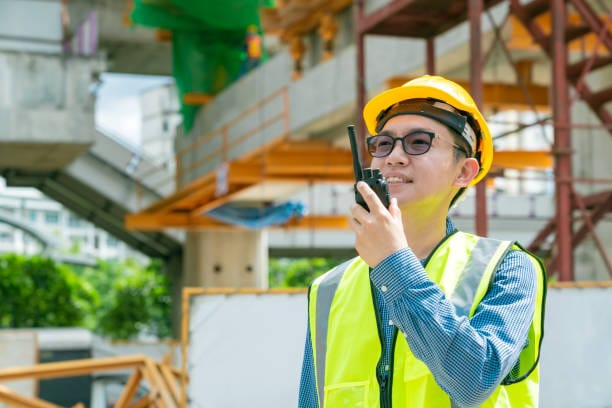
Communication between the operators of different machines, the supervisor of the construction site, and the labor team is enhanced using walkie-talkies between construction workers in the city, including Tokyo or Osaka, which enhances safety and efficiency of workflow in the implementation of multi-floor or large-scale construction projects.
B. Security and Facility Management
Hotels, shopping malls, office buildings, as well as airports, have security personnel who use walkie-talkies to communicate quickly as well as respond to incidents very quickly, and coordinate various teams effectively to maintain safety, ensure that there is no chance of an emergency, and that day-to-day operations are well coordinated.
4. Transportation & Emergency Services
A. Railways
The walkie-talkies are used by the staff of the railways, such as the Shinkansen and subway operators, to coordinate the schedules of the trains, the maintenance, the movement of passengers, and, in cases of emergency, to ensure safe and on-time transportation in the busy Japanese rail networks.
B. Aviation and Airports
Major airports such as Tokyo Haneda, Narita, and Osaka Kansai have ground staff that rely on walkie-talkies to control luggage, boarding gates, aircraft, and emergency communication, among others, to ensure efficient operations in the large terminal areas.
Tips for Using Walkie Talkies Legally in Japan
- Only use models with low power and that are license-free.
- Use assigned public frequency bands.
- Do not interfere with emergency service.
- In the case of business or events, acquire appropriate licenses in case they need more power.
Alternatives to Walkie Talkies in Japan
In case communication is desired but without risk of a lawsuit:
Smartphone Apps:
Messaging applications such as LINE, WhatsApp, and Messenger allow traveling to Japan to send messages in real-time without the need to think about radio laws, where text, voice, and group chat are supported to ensure a safe and legal connection to the country.
Rental Radios:
The use of a radio on a temporary and legal basis can be done under many hiking tours, outdoor activities, and adventure companies in Japan, which include a rental of a radio that is fully compliant with the local laws, which means that a group of people that goes to a remote or mountainous location has the opportunity to communicate with temporary and legal radio use.
Amateur Radio Clubs:
Higher-power radios can be used by licensed HAM radio operators in Japan. Membership in a local amateur radio club provides guidance, frequency access, and safe use under government regulations to amateurs.
Conclusion
Only Japan-made walkie-talkies that are of local standards are legalized. Lower-power, license-free radios are ideal for use by tourists, for outdoor activities, and at events, whereas high-power or imported radios will need licenses. Adherence will make communication safe and reliable and prevent fines, confiscation, or legal inconvenience.