
Learn about Is Walkie Talkie Legal in Pakistan, types, uses, and PTA regulations for personal and professional communication. Stay compliant and safe.
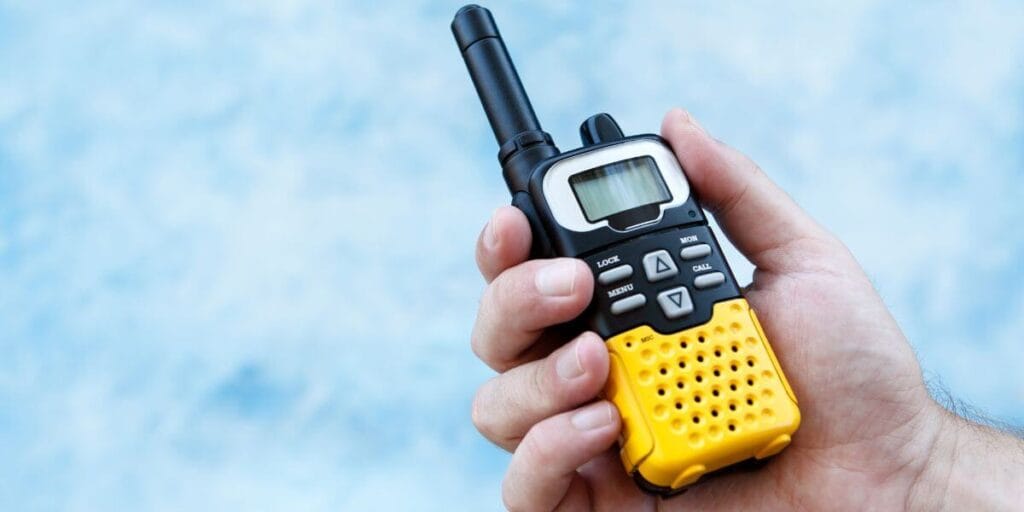
A walkie-talkie is a small two-way radio that is used in short-distance communication in Pakistan. These gadgets are popular among families, hikers, security personnel, and businesses, as they enable one to communicate instantly with a voice transmission without the need for cellular networks. Walkie-talkies are convenient in both casual and professional use because they come in various types, powers, ranges, and licensing.
Types of Walkie-Talkies
1. Consumer Walkie Talkies:
- Small gadgets that are used in informal communication.
- Usually reach a distance of 1-5 kilometers.
- Usually utilized on a family, hiking, or small-scale level.
2. Professional Walkie Talkies:
- Power-intensive products such as security staff, police, and businesses.
- Can traverse long distances of up to 10-20 kilometers.
- Frequently need authorization provided by governmental authorities because of the increased frequency.
Is Walkie Talkie Legal in Pakistan?
Yes, the use of walkie-talkies in Pakistan is legal, provided these are used in low power and license-free frequencies as licensed by the Pakistan Telecommunication Authority (PTA). Professional or high-power radios must have a PTA license. The use of unapproved frequencies or the use of unapproved devices may result in fines, seizure, or lawsuits.
Walkie Talkie Frequency and Regulations in Pakistan
Walkie-talkies in Pakistan use a given radio frequency. The Pakistan Telecommunication Authority (PTA) has put regulations on the use of radio devices such as the walkie-talkies to avoid interference with licensed communications.
Key points regarding walkie-talkie usage in Pakistan:
- Legal Frequency: It is only available in a frequency that can be used by the people. The use of devices that use restricted frequencies or licensed frequencies without permission is prohibited.
- Power Limit: Radios that are to be used in the hands have to follow power limits so that they do not interfere with other communications.
- Licensing: There is a possibility of licensing some advanced walkie-talkies, which have greater transmission power, by the PTA.
Users should also ensure that the device they are going to use does not violate the local regulations. Abuse of frequencies may result in fines or seizure of the device.
Common Uses of Walkie Talkies in Pakistan
Security Services
Licensed walkie-talkies are employed by security companies, event organizers, and private guards to make their communication fast and reliable, so that coordination of the work at the event, patrol, and monitoring is usually good, and it is important to note that the security and response time is good.
Outdoor Activities
Low-powered walkie-talkies are used in hiking, camping, and adventure trips to help hikers remain in touch in often inaccessible and unreliable places, organize their movement, and stay safe in the absence of the mobile network.
Businesses
Walkie-talkies are used in warehouses, factories, construction sites, and large workplaces to facilitate the communication of the workforce, to provide efficient coordination of operations, to save time, and to increase productivity in fast-paced and noisy workplaces.
Emergency Situations
Rescue teams, disaster management authorities, police, and first responders use professional walkie-talkies for instant communication during emergencies, enabling quick decision-making, coordination, and effective management of critical situations.
Who Can Legally Use Walkie-Talkies in Pakistan
Walkie-talkies can be used legally by the following categories:
- Certified security agencies.
- Construction and industrial companies (with permission).
- Organizers of the event (temporary licenses)
- Government departments
People are able to use walkie-talkies, but only when the device has complied with the PTA guidelines.
When Can You Use a Walkie-Talkie Without a License?
There are low-power walkie-talkies that can be operated legally without a license:
- Often use license-free frequencies, such as 446 MHz.
- They are short in range (a few kilometers only).
- Permanent channels and removable antennas.
This is because when your walkie-talkie has such rules, you can use it at home, outdoors, and for small activities.
How to Use Walkie Talkies Legally in Pakistan?
1. Buy PTA-approved models
Take walkie-talkies with a PTA approval sticker or certificate. This makes sure that the device is in accordance with the rules in Pakistan, and no fine or seizure by the authorities.
2. Use license-free frequencies
To use recreationally or personally, choose walkie-talkies that use license-free bands, such as 446 MHz. They are low-power, safe, and legal radios that do not require the use of a PTA license.
3. Get a license for business use
Should professionals who use walkie-talkies in the security, events, or construction fields seek a PRN license with PTA? This provides a legal right to use more powerful radios and other frequencies.
4. Avoid importing unapproved devices
Do not carry walkie-talkies without permission from the PTA. Illegal or unapproved devices may be seized through the use of customs and resulting in a loss of money and legal complications. Make sure to check PTA compliance first.
Role of Pakistan Telecommunication Authority (PTA)
The Pakistan Telecommunication Authority (PTA) has the duty of:
- Radio frequency allocation.
- Issuing licenses
- Surveillance of illegal communication equipment.
- Enforcing telecom laws
PTA will be a source of any type of wireless device that broadcasts signals, particularly over long distances. You may get to know more on the official PTA site.
Conclusion
In Pakistan, the use of walkie-talkies is legal, provided that it is used in line with the PTA provisions. Devices with low power on license-free frequencies can be used safely by individuals, although professional or high-power radios must be approved by the PTA. Adherence to these rules leads to legal, efficient, and safe communication within different activities and professions.