

Learn when were Walkie Talkies Invented, their history, features, pros and cons, uses, and why they remain reliable tools for military, emergency, and everyday communication.
Walkie-talkies are another communication tool that is essential to modern communication, but was crucial in the military, during emergencies, and in recreational communication over the decades. These are handheld two-way Radios that enable one to send and receive voice messages instantly and within a short distance, which makes them very important in circumstances where traditional phones are not viable or where they are unavailable.
Origins of Wireless Communication
The concept of wireless communication is traceable to the late 19th and early 20th centuries. The idea of transmitting signals without physical wires attracted scientists and inventors.
Radio technology led to the breakthrough, which was achieved by such inventors as Guglielmo Marconi, who in 1895 was able to prove the long-distance wireless communication. These were early radio systems, which were large and fixed; thus, they could not be used as portables.
When Were Walkie Talkies Invented?
In 1937, a Canadian engineer by the name of Donald Hings invented walkie-talkies. These two-way radios were originally meant to be utilized in military communication, but they transformed field communication.
They proved to be a necessity to soldiers during World War II, as they enabled real-time coordination. The invention was a tremendous breakthrough in wireless communication technology, and it formed the present-day radio devices.
Pros and Cons
Pros:
- Mobile network provides free instant communication.
- Lightweight and portable
- Available during remote or emergencies.
- User-friendly with low technical skills.
- Sturdy and resistant to weather.
Cons:
- Poor range as compared to mobile phones.
- Can get interference in crowded regions.
- Needs sight line in certain topography.
- Extensive use may be hampered by battery life.
Key Features of Walkie Talkies
The modern walkie-talkies are equipped with many functions, including:
- Two-way communication
- Push-to-talk (PTT) button
- Multiple channels
- Battery-operated or rechargeable.
- Long-range signal support
- Muffled sound and crisp sound.
- Waterproof or dustproof designs (on certain ones)
The mentioned features ensure that the walkie-talkies are reliable both in the workplace and in the field.
Why Were Walkie-Talkies Invented?
There were several practical requirements behind the development of walkie-talkies:
- Military Communication: In wartime, communication was required to be quick, safe, and portable. Soldiers had to have a handheld device that would help in coordination.
- Emergency Response: The initial versions played an important role in providing rescue teams, police, and firefighters with instantaneous communications in dangerous situations.
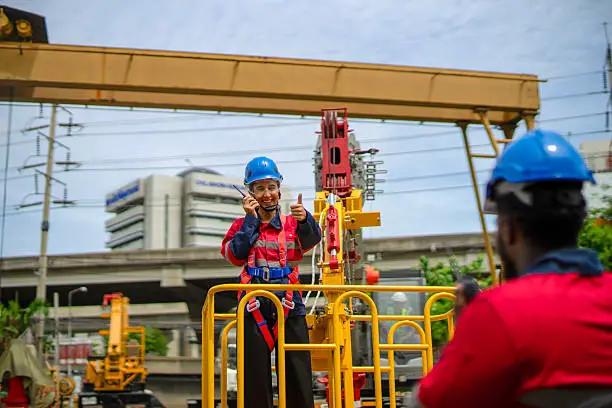
- Remote Sites: Miners, forest workers, or even the workers in the building sites were not always able to access the normal telephone lines, and this necessitated the use of wireless communication.
Simply put, walkie-talkies were created on the basis of human necessity to communicate instantly, reliably, and portably.
Walkie Talkies vs Mobile Phones
| Feature | Walkie Talkies | Mobile Phones |
| Network Required | No | Yes |
| Monthly Cost | No | Yes |
| Durability | High | Medium |
| Ease of Use | Very Easy | Moderate |
| Emergency Reliability | High | Limited |
How to Choose the Right Walkie Talkie
The following will be the considerations when purchasing a walkie-talkie
Important Factors to Consider:
1. Range
The amount of range that a walkie-talkie provides depends on your environment, terrain, and distance requirements, so you should choose one that will support clear and uninterrupted communication at all times.
2. Battery Life
Select models with long battery life or those that can be recharged so that there is less charging and the models can be used reliably during long periods of activity outdoors or at work.
3. Channels
The existence of more channels reduces interference and enhances privacy, and enables easier communication, particularly in places of high density of radio users.
4. Durability
Find waterproof, dustproof, and shock-resistant designs to be able to last long in the difficult outdoor, industrial, or emergency conditions.
5. Purpose
The workforce needs strong, long-lasting models with sophisticated features, whereas leisure or sporting activities can consider the use of simple and affordable walkie-talkies.
How far can walkie-talkies work?
The range of walkie-talkies is also dependent on the model and the environment, which is generally 1 to 2 kilometers for the most basic ones and more than 50 kilometers for high-quality devices.
Are walkie-talkies better than mobile phones?
Group communication, emergencies, and remote locations are the situations where the walkie-talkies are better, as the tool does not require mobile channels or internet connectivity.
Conclusion
In 1937, the invention of walkie-talkies changed communication in that it provided instant, portable, and reliable communication over the network. From military to daily applications, they have been and always will be useful in cases of emergency, outdoor adventure, and even work-related situations, and are where reliable communication can be of crucial importance.