

Learn about Are All Walkie Talkies Compatible. Learn if all walkie-talkies are compatible, factors affecting communication, and tips for seamless connectivity.
Introduction
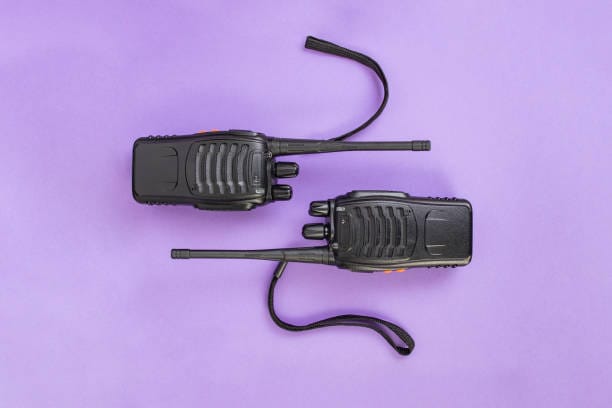
Two-way radios, also referred to as walkie-talkies, have been part and parcel of communication over the decades. They have extensive applications across all kinds of industries like construction, security, event management, and outdoor recreation. As technology grows, there are several walkie-talkies with different models, frequencies, and features.
Are All Walkie Talkies Compatible?
Not every walkie-talkie is compatible with the other. The compatibility is based on the frequency range, channel separation, and communication protocols. Others are FRS, GMRS, or PMR frequencies, which do not interoperate. To make sure they can communicate, always verifying specifications is important, particularly when combining brands or models.
Common Compatibility Scenarios
Scenario 1: FRS with FRS Radios
FRS on the same channel and subchannel radios communicate flawlessly. It is the least complicated compatibility.
Scenario 2: FRS with GMRS Radios
Certain GMRS radios have the capability of running at lower power on FRS frequencies. Communication can take place in this instance, but:
- FRS power output restricts range.
- There are GMRS radios that could have functions disabled on FRS.
Scenario 3: GMRS with GMRS Radios
Both GMRS-licensed radios are typically capable of communication with each other, providing a greater range and other higher-end features such as repeaters.
Scenario 4: Digital Radio with Analog Radio
Digital radios will not be able to communicate with analog radios unless the device is dual-mode capable. Otherwise, you might have to upgrade or any other hybrid radios.
Scenario 5: Cross-Band Communication
The VHF and UHF radios are not able to communicate directly since they are operating on completely different frequencies. A VHF radio is not able to communicate with a UHF radio except with special cross-band repeaters.
Factors That Affect Real-World Compatibility
Practical factors may influence communication even in cases where radios are technically compatible:
1. Terrain
Radio signals can be weakened by hills, forests, and buildings. Even the same radios can be of a lower range in urban or hilly regions.
2. Interference
Communication can also be interfered with by other electronic devices, Wi-Fi signals, and other radio transmissions in the vicinity, which makes compatibility less efficient.
3. Antenna Quality
Even when technically compatible with another device, radios of lower quality in terms of antenna should not work.
4. Battery Life
Poor quality batteries have the potential to lower the transmission power such that compatible radios cannot be used to communicate over anticipated distances.
Future of Walkie Talkie Compatibility
Contemporary radios are more and more being made with interoperability:
- DMR standards enhance inter-device communication.
- Multi-band radios are able to work on various frequencies.
- There is Bluetooth integration to connect to smartphones and applications to provide a longer life.
The developments are supposed to ensure compatibility is not such a pain for both casual users and professionals.
Practical Tips for Ensuring Compatibility
1. Check Frequency and Band Specifications
Make sure that the walkie-talkies are of an identical frequency range and band. Incompatible frequencies cannot communicate, and this is why verification of the specifications should be done before utilizing them, as they ensure perfectly smooth communication of devices.
2. Standardize Channels and Codes
All the devices should be set to the same channel and with similar privacy codes. Standardization eliminates interference, improves clarity in communication, and prevents unintentional overlapping with other users in the vicinity.
3. Invest in Compatible Brands
Whenever possible, we use walkie-talkies of the same manufacturer or series. The consistency of brands can be used to guarantee the similarity of protocols, improved performance, and simpler configuration to achieve reliable communication.
4. Test Communication
Test the range and functionality before using the use of walkie-talkies. Ensure that the devices are clear in transmission and reception without any technical failures to interfere with vital communication.
Scenarios Where Compatibility Matters Most
1. Outdoor Adventures
In hiking, camping, or off-road activities, the compatible walkie-talkies will help maintain communication over a long distance, with everyone safe and coordinated, where cell service is limited or absent.
2. Professional Environments
During such working environments as construction sites, security, or event management, compatibility will provide the team members with the ability to communicate in real-time, which enhances efficiency, safety, and coordination without interruptions caused by devices that are incompatible.
3. Family and Recreational Use
To go out together as a family, take a road trip, or play games in the neighbourhood, compatible walkie-talkies only need all to stay in touch and organize the events and have fun without any misunderstandings and/or distortion.
Common Myths About Walkie Talkie Compatibility
Myth 1: All walkie-talkies can talk to each other
False. The walkie-talkies should be of the same frequency, channel, and type of transmission. Incompatible settings do not allow communication, and therefore, there will not be universal compatibility.
Myth 2: Brand doesn’t matter
Partially true. Other brand radios can communicate with each other provided settings are compatible; however, with digital walkie-talkies, each brand needs to be used to ensure full compatibility and feature functionality.
Myth 3: Higher power ensures compatibility
Incorrect. The larger the power, the greater the range, but it does not guarantee compatibility. Devices need to use the same channel codes and frequency to communicate.
Conclusion
Walkie-talkies are not always interoperable. The compatibility is based on frequency, channel, and type of technology. This would help in making sure that there is good communication, whether professionally, recreationally, or safely, by understanding the specifications of the devices, standardizing settings, and selecting compatible brands. Different scenarios are optimally tested.