
Learn about Will Walkie-Talkies Work in Europe. Discover if walkie-talkies work in Europe, using PMR446 radios for legal, reliable, short-range communication.
Introduction
European walkie-talkies are portable two-way radio that enables instant communication over short distances only. They have to adhere to European standards, which are normally PMR446 frequencies, which are restricted to 0.5 watts. Popular with outdoor activities, outdoor events, and work, they offer an effective and non-licensed communication in most European states.
When you are going to Europe or transferring there, you may have that question about whether your reliable walkie-talkies will work well there. Walkie-talkies are extensively utilized in personal, recreational, and professional communication, particularly in places where the cellular network coverage is weak. But in cases where they cross international borders, some factors influence their usability.
How Walkie-Talkies Work
Walkie-talkies utilize radio waves. These waves move in-between devices. Countries have varying frequencies of radio.
- Most of the walkie-talkies in the USA operate on FRS or GMRS.
- In Europe, the PMR446, which is already a different frequency range than used in Europe, is used in most of the legal walkie-talkies.
This implies that a walkie-talkie designed in the USA will not work in Europe, since it operates on incorrect frequencies.
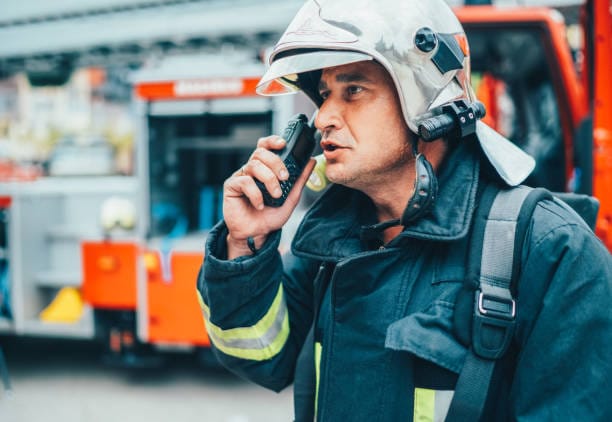
Will Walkie-Talkies Work in Europe?
Walkie-talkies are compatible in Europe, but they must conform to the PMR446 standard. Such radios work under certain frequencies which are permitted within the European nations. Interference or illegality may occur because of using non-compliant devices. The PMR446 radios are free of license, can be used to engage in light conversation, and are safe and reliable to use when traveling or organising activities within the European region.
Advantages of PMR446 Walkie-Talkies
- Legal and Safe: PMR446 walkie-talkies are license-free and legal in most European countries, and this makes them a safe and hassle-free form of communication that can be used on a personal, recreational, and professional basis.
- Easy to Use: PMR446 walkie-talkies are easy to use with simple keys, presets, and user-friendly controls, so anyone can use them to communicate without the use of technical knowledge and complex setups.
- Portable: These are compact, lightweight, and can be put in the pockets or in backpacks and can be used anywhere, whether at all times during travel, outdoor experiences, or communication when a person is on the move.
- Reliable in Remote Areas: PMR446 walkie-talkies are reliable in places with no or poor cell signal coverage, and they offer reliable communication to hikers, campers, or workers in remote areas.
Things to Check Before Using Walkie-Talkies in Europe
Frequency band
Make sure that your walkie-talkie operates on PMR446 or a different legal band in Europe, such as LPD433. Transmission on unauthorized frequencies can be criminal, and it may disrupt other transmissions.
Antenna type
The rules in Europe dictate that you have a fixed antenna on your radio. Separable antennas are not allowed because they might surpass legal standards and interfere with the signal adherence.
Power output
In Europe, PMR446 radios should not have more than 0.5 watts. Powerful devices are prohibited and may disrupt other users, so ensure that your radio is not producing too much power.
Local rules
Different European nations can have a particular walkie-talkie rule. Local laws will always ensure that you do not get fined or get in trouble with the law when using your device.
Compatibility
All the members of your group must be on the same radio standard. Different bands or standards of radios cannot talk with each other; thus, before travelling, check compatibility.
Range expectations
PMR446 radios do have short distance design. It does not have the long-range coverage that mobile phones achieve; it may be further restricted by terrain, buildings, and weather.
Buying locally
Purchase PMR446 radios in Europe in case of uncertainty. They are legal in the country, readily available, and will enable you to have good, reliable, trouble-free communication in the country.
Where Walkie-Talkies Are Useful in Europe
Walkie-talkies come in handy in most circumstances:
1. Hiking and outdoor trips:
Mobile signals are weak in the mountains, forests, or any rural part of Europe. The PMR446 walkie-talkies allow groups to remain in touch, plan routes, and be safe during outdoor fun without using the phone.
2. Family or friends in cities:
Walkie-talkies would be useful in busy city centres or shopping malls, or even amusement parks, to allow the family or friends to stay in touch with one another, prevent the family from losing track of each other, and organize a meeting point without having to empty their mobile data bundles or find bad signal spots.
3. Tour groups or small events:
Walkie-talkies are a simple and instant means of communication in the case of small events like a tour group. They enable coordination between the organizers and the participants and updates as well and logistics without relying on mobile networks.
4. Temporary use:
Walkie-talkies provide easy communication even during short journeys or holidays without the use of local SIM cards. They are cheap, trustworthy, and ideal for temporary use in various destinations in Europe.
Using Walkie-Talkies While Traveling in Europe
In case you are going to use the walkie-talkies in Europe, follow the following suggestions:
- Purchase a PMR446 radio before travelling. They can be found in electronics shops or online stores in Europe.
- Always ensure that your radio is charged up. The battery life is different depending on the model, normally 812 hours.
- You can use earpieces or headsets in case you want to have personal conversations.
- Never disobey the local regulations. Other nations might have specific radios that need to be utilized either outside or during emergencies.
Risks of Using Non-Compliant Walkie-Talkies
Problems can be connected with the use of radios, which are not permitted in Europe:
- They may not work at all
- As long as there are other people with compliant radios, nobody can communicate with you.
- Law problems: fines, seizures, or penalties.
- Interference: can be disruptive to emergency services or other licensed radios.
To be on the safe side, one should use legal and compliant radios in Europe.
Tips Before Using Walkie-Talkies in Europe
- Ensure that your radio is PMR446.
- Ensure that the antenna is mounted and the power is not more than 0.5W.
- CE or RED certification to make sure it is legal.
- Know that there is a restriction on the range.
- Use not to congest channels in urban areas.
- Do not attempt to make it work by altering frequencies illegally
FAQs
Do I need a license for walkie-talkies in Europe?
In the majority of European countries, PMR446 walkie-talkies do not need a license. They are suitable for the masses, easy for us, legal, safe, and free of hassles for all.
Can I buy walkie-talkies in Europe for tourists?
In Europe, tourists do purchase PMR446 walkie-talkies. They are easily found in electronic shops, online stores, and outdoor shops, and are portable and can be used for recreation.
Can I use walkie-talkies in all European countries?
The PMR446 walkie-talkies are compatible in most European countries; however, local regulations might be slightly different. Awareness: Country-specific regulations to ensure the legality and safety of use always.
What is the maximum range of PMR446 radios?
The usual maximum range of PMR446 walkie-talkies is 3-10 kilometers, with various aspects depending on the terrain, obstructions, and the environment. Cities decrease distance, whereas open space enables a greater distance of communication.
Conclusion
Walkie-talkies are able to operate in Europe provided that they adhere to PMR446. They are legal, portable, and easy to use, and guarantee good short-range communication during travels, outdoor activities, and occasions. Never use a device without verifying the local regulations, range, and device compliance.