

Learn about What Radios Do Truckers Use. Discover what radios truckers use, why CB radios dominate, and how they provide reliable, long-range communication on the road.
An important communication tool and a safety measure is the use of radios by truckers to maintain communication, keep abreast of events, and coordinate. Even with the advent of modern technology, including smartphones, GPS applications, and computerized navigation systems, radios will still be needed, as they will continue to operate in isolated areas, during signal failures, and in poor conditions.
Why Truckers Still Use Radios
Modern technology notwithstanding, radios have an advantage that can not be matched by phones:
- No dialing or waiting for instant communication.
- Places having no cell service.
- Dependable in case of emergency.
- Low or no monthly cost
- Communication with numerous drivers simultaneously
It is due to this reason that radios are still a very important device in the trucking world.
What Radios Do Truckers Use?
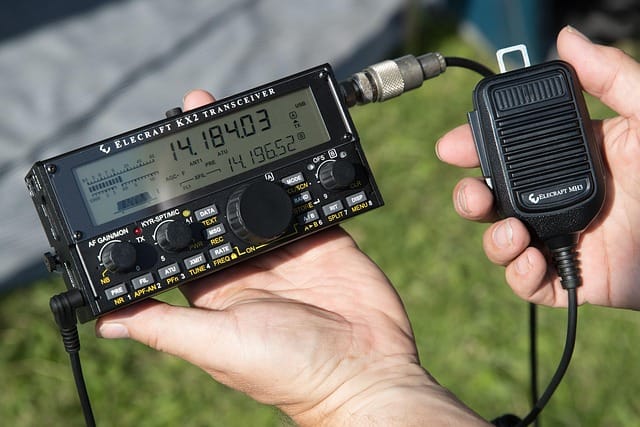
CB radios (Citizen Band) are commonly used by truckers to make quick and reliable communication on the road. The most popular channel is 19 with traffic news. Other drivers are also adopting GMRS radios to enhance range and HAM radios to communicate over long distances, but the most common tool of communication in trucking is CB.
Benefits of Using CB Radios
1. No License or Fees Required
CB radios are not expensive at all. Any person can switch it on, select a channel, and begin to talk; no annual fees or licenses are required.
2. Instant Communication
CB radios have quick, push-to-talk communications. You do not have to dial numbers or wait till apps are loaded. One only needs to press the button and talk.
3. Works Even Without Cell Service
CB radios do not have cell towers, as compared to cell phones. They are operating in remote regions, mountains, deserts, or long streets where the telephone network goes dead.
4. Perfect for Road Alerts
CB radios help truckers to alert one another about accidents, roadblocks, or traffic congestion, and the police location or a highway hazard. This assists the drivers in keeping safe and conserving time.
5. Emergency Communication
CB radios have channel 9, which is used in emergencies. A CB radio is capable of letting other road users know of your presence, in case of a breakdown or in case you need assistance.
6. Easy to Use and Install
CB radios are simple devices. Their use is easy even for novices. It can easily be installed in vehicles and does not need a high level of technical skills.
7. Great for Convoys and Group Travel
In the case of group transport (truckers, off-roaders, recreational travelers), it is easy to remain in touch continuously with the help of CB radios.
8. Affordable Communication Option
CB radios are more affordable than GMRS, HAM, or satellite radios. Even superior quality CB models are affordable, hence they are affordable to all.
10 High-Quality CB Radios Truckers Should Know About
Uniden PRO520XL / PRO510XL
A simple one-wire CB rig with 4-Watt AM transmit, obtrusive loudspeaker, detachable microphone, and inbuilt SWR meter; very useful in dependable highway communications.
Cobra 29 LTD Classic
An unchanging CB radio with a large display that is bright, instant channel store, automatic squelch, talkback capability, and a weather/alert channel, with decades of proven design from Cobra.
President McKinley
High-performance CB radio with single sideband (SSB), variable power output, ANL noise filter, RF gain control, and a backlit display, perfect when needed to communicate over long distances with clarity to the trucker.
Uniden Bearcat 980 SSB
Offers AM and SSB modes, an automatic noise canceller, switchable RF gain, SWR meter, removable microphone – a potent choice with serious users of CB.
Stryker SR-25MC
Small, streamlined CB radio, Class-D external noise cancellation, automatic channel access, green VFD display, and built-in durable housing – excellent in truck cabins.
Stryker SR-94HPC
Specifications: 4-Watt AM + 12-Watt SSB, full-screen menu, one-button channel recall, white backlit screen, and powerful signal operation; high-quality long-haul communications.
Stryker SR-447HPC
High-powered CB radio with selectable AM/SSB modes, instantaneous channel select, strong ANL filter, noise blanker, and full front pane, including long-life front panel – designed to provide reliable long-distance connections.
Stryker SR-497HPC
Powerful for highway and cross-country trucking, 4 W AM and 12 W SSB CB radio, high-performance digital VFD screen, RF gain, SWR calibration, and sophisticated squelch; high-performance.
Stryker SR-655HPC
Granted to 40 watts peak in SSB, RF/gain controls, auto-squelch, instant channel recall, tough case – the full working rights of serious DX communicating.
Stryker SR-955HPC
The greatest range CB radio, 40-watt peak SSB, adjustable AM power, noise cancelling, SWR meter, easy-to-use tuning wheel, and long-range performance.
Features The Best CB Radios For Truckers Have In Common
1. Power
Good CB radios have high output power, which helps to communicate better and have more range. Increased power assists the signals to be spread over a greater distance, particularly in rural or highway settings where there is heavy congestion.
2. Single Sideband Modulation (SSB)
SSB extends the communication range/clarity as it utilizes more efficient signal transmission. It enables the truckers to travel further distances, and the noise is minimized, which makes the conversations cleaner and more dependable.
3. Antenna
An antenna of good quality gives unbelievable range and signal strength. Truckers also use tuned and well-mounted antennas to ensure that they are in constant communication over long distances and through rough terrain.
4. SWR Meter
An SWR meter also provides the correct tuning of the antenna. It avoids signal loss, shields the radio, and enhances its overall performance and communication quality.
5. Microphone
An excellent microphone provides articulate sound. Noise-canceling mics are used to minimize the engine noise and wind, and they are also used to make sure that the truckers can communicate easily, even though they are driving in a noisy environment.
6. Squelch Control
Background noise where no one is talking is removed by squelch control. It maintains the channel silence until a powerful signal is detected, which enhances listening and eliminates continuous static.
7. NB/ANL
The NB and ANL suppress electrical and engine noise. These characteristics assist in ensuring good sound, particularly in driving over noisy or industrial environments.
8. Hi-Cut Filter
A Hi-Cut filter eliminates high-frequency noise and harsh statics and allows voices to sound cleaner and more intelligible in a conversation, particularly in a busy channel or a noisy area.
The Benefits Of 10-Meter And CB Radios For Truckers
Extra Level of Safety
CB or 110-meter radios offer instant communication in case of an accident, breakdown, or emergency. The truckers will be able to use the time to call in case of help, alert others of dangers, and maintain a connection with cell services that fail in certain areas.
Easier Navigation
With these radios, truckers can obtain real-time road reports, detour advice, and traffic warnings given by other road users. This will assist them in bypassing delays, roadblocks, and unsafe conditions to make their journey easier.
Helps Drivers Stay Awake
The use of radio conversations with other motorists is useful in combating road fatigue in cases where the hour is long. Small talk, news on the weather, and friendly check-ins keep truckers on their toes and busy in mind.

Which Radio Do Most Truckers Use Today?
A modern trucker may use multiple communication systems depending on the scenario:
| Radio Type | Main Purpose | Range |
| CB Radio | Road communication, traffic updates | 2–10 miles |
| GMRS | Convoys, clearer local comms | 5–50 miles |
| HAM | Advanced long-range | Local to global |
| PTT 4G/5G | Fleet communication | Unlimited (network required) |
| Satellite | Off-grid/emergency | Global |
Why CB Radio Still Survives in the Trucking World
Truckers continue to use CB radios despite modern technologies due to the following reasons:
- They are quite universal throughout North America.
- All truckers are conversant with the channels.
- They provide real-time communication.
- They are faithful and free of subscription fees.
- They belong to the trucking culture.
The communication via CB radios that is simple and helpful continues to be the main means of communication in the trucking industry.
Conclusion
Truck drivers use CB, GMRS, and HAM radios to communicate in a reliable way while driving. Radios are still necessary for fast news, warnings of emergencies, and clear communication over long distances, even with modern technology. Their consistency, affordability, and worldwide truck driver culture grant them a place in the trucking industry, along with other such methods of communication.