
Learn about Can Kids Walkie Talkies Pick Up Other Signal. Kid walkie-talkies and signal interference explained. Learn if kids’ walkie-talkies can pick up other signals and how to stay safe.
What Is a Kid Walkie Talkie?
A kid walkie-talkie is a small and lightweight two-way radio designed specifically for children. They are also safer with fewer and easier controls, kid-safe materials, and less power to operate compared to professional or commercial radios. They enable children to communicate within short ranges- 0.5-3 miles; the ranges vary according to the topography and the model.
Main features
- Easy buttons allow children to operate independently without assistance.
- The range was kept safe and limited by low power.
- Fixed channels which correspond to the public radio frequency.
- Non-toxic and small-hand friendly materials.
- Fun applications such as flashlights, alarms, ringtones, or cartoon themes
Can Kids Walkie Talkies Pick Up Other Signal?
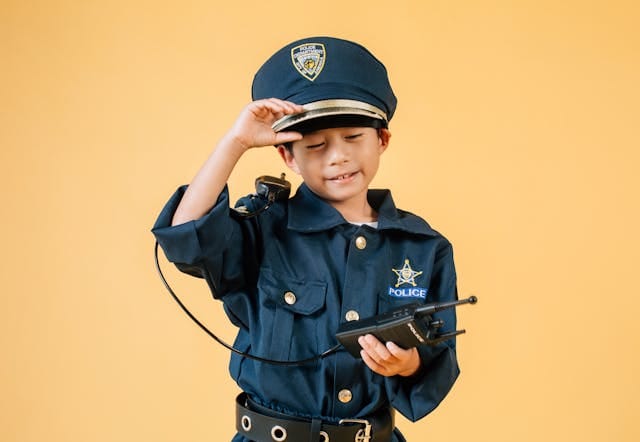
Yes, walkie-talkies of kids are sometimes prone to receiving other signals as they share open radio frequencies. There are baby monitors, baby radios, or other devices that can be interfering with their channels. Though this is not dangerous, it may lead to interference or unforeseen voices. These possibilities are minimized by the selection of models with privacy codes and enhanced clarity of communication.
How to Keep Kids Safe While Using Walkie-Talkies
There are multiple steps that you can take to minimize the possibility of hearing other voices:
1. Use Higher Channels
The channels with higher numbers typically experience reduced traffic and minimize noise caused by the neighbouring users. When kids are playing, it is better to switch to channels 8-14 so that they will not have to deal with random conversations and make their communication more organized and safe.
2. Choose Models with “Sub-Channels”
Walkie-talkies have walkie-talkies with CTCSS or DCS privacy codes to enable the separation of unwanted transmissions on the same frequency. These characteristics provide the added safety measures that would enable children to chat without having voices interfere with their dialogues.
3. Teach Kids Not to Reply
describe that they should not respond when they hear unfamiliar voices. Instead, they are supposed to switch the channel at once or call an adult. This is a simple rule that allows children to be safe and avoid unwanted interactions.
4. Supervise When Possible
Keeping track of children when they are on the walkie-talkies, particularly when they are in the open, is a way of ensuring that they are in safe channels and they do not encounter strangers. Supervision also aids in the rapid response in case of interference or suspicious activity.
5. Upgrade to a Better Quality Device
Better brands such as Motorola, Retevis, and Obuby are received with better reception, clarity of sound, and privacy choice. These enhanced models are less prone to interference, thus making communication safe, more reliable, and more enjoyable for the children.
How Far Can Kid Walkie-Talkies Reach?
The reason why the range is important is that the greater the range, the higher the likelihood of hearing other people.
Indoor Range
The kid walkie-talkies have an indoor range of about 0.3 to 1 kilometer under normal conditions, with a lot of dependence on the walls, furniture, and building materials, which weaken the signals and make them less clear. Situations where there are communication barriers inhibit effectiveness in communication.
Outdoor Range
Usually, the range of outdoor coverage spans between 2-5 kilometers, where there is clearer communication in open spaces with no significant barriers. The open streets and flat fields permit the signals to travel over a greater distance, enhancing the performance and reliability.
Mountain or Forest Range
When in the forest or mountainous areas, the range reduces to approximately 1 to 3 kilometers. During communication, signals are interrupted because of trees, hills, rocks, and uneven terrain, resulting in a shorter distance and hindering some of the transmissions from being received clearly.
Why Kid Walkie-Talkies Pick Up Other Signals (Technical Explanation)
Signal interception is frequent because of several technical reasons:
1. Shared Public Frequencies
Kid walkie-talkies use o, pe,n unlicensed public frequencies, where any person is allowed to use freely. These channels are also used by millions of other users, so the radios of children are easily picked up in the vicinity of a transmission, resulting in unintentional signal interference or overlap.
2. No Privacy Codes
The vast majority of kid-walkie-talkies do not have CTCSS tones, or DCS privacy codes, or digital encryption. In the absence of these filtering systems, outside conversations cannot be blocked by the device, and therefore, any radio transmitting on a similar frequency can be heard immediately.
3. Low Filtering in Cheap Models
Economical kid walkie-talkies come with basic toy-grade circuits with no powerful RF filtering. They are therefore very susceptible to stray signals, electrical noises, and crossing transmissions m,, making them easily pick up nearby radio activity.
4. Limited Channels
There are a few shared channels with kid walkie-talkies. Frequency crowding takes place due to a large number of users sending messages at the same time. This jamming makes the possibility of getting undesired signals from other radios that use the same channel more likely.
Benefits of Allowing Kids to Use Walkie-Talkies
Walkie-talkies have enormous advantages despite the low level of risk:
1. Encourages Outdoor Activity
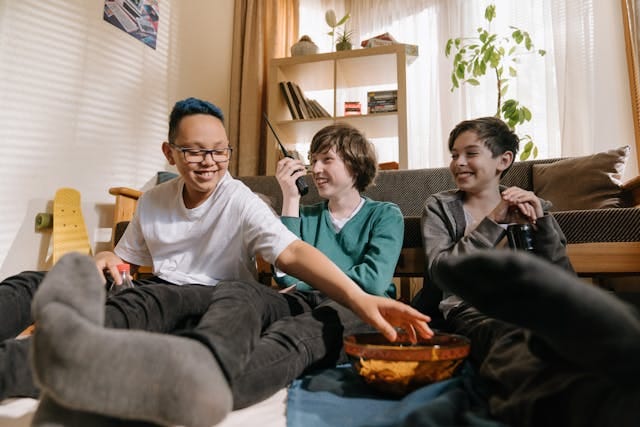
Children will be encouraged to play outdoors, explore their surroundings, play games of adventure, and engage in physical activities using walkie-talkies. This enhances self-confidence, individuality, and healthy lifestyles and keeps them securely linked to their friends or siblings.
2. Teaches Communication Skills
Walkie-talkies assist children in working on their articulation, turns, and collaboration. They get to know how to convey the message, listen attentively, and organize with others, which makes them better at socializing and becoming more confident in communication situations in real-life interactions.
3. Enhances Imagination
Walkie-talkies add life to creativity through increased pretend play, spy missions, treasure hunts, and make-believe adventures. Children develop narratives, characters, and places, enhancing the imaginative play and turning games more active and engaging.
4. Improves Coordination
The walkie-talkies are used to organize the activities during the outdoor games, hide and seek, camping, and group plays. They enhance cooperation, planning, and prompt decision-making, enabling children to communicate on the spot and remain in order during the event.
5. Safe Alternative to Smartphones
Walkie-talkies also provide a communication option that does not require internet, apps, or social media, which is without screen time and risk of digital addiction. They enable children to be connected without any danger and also have privacy, independence, and avoid smartphone distractions.
Conclusion
Kid walkie-talkies may also cause interference with other signals occasionally since they use common public frequencies, but this is normally harmless. Children will be safe, have fun, and experience quality communication during play because of privacy codes, appropriate supervision, and quality devices.