
Learn about Are Walkie-talkies Safe For Kids. Are walkie-talkies safe for kids? Learn about safety, benefits, features, and how to choose the best models.
What Are Kids’ Walkie-Talkies?
Walkie-talkies among kids are handheld two-way radios designed to be used by kids. They permit convenient communication between two or more devices within a particular radio frequency. They operate like adult walkie-talkies, but have simpler controls, are made of safer materials, and are child-friendly.
Key Features of Kids’ Walkie-Talkies
1. Child-Friendly Design
Walkie-talkies of kids have interesting shapes, soft buttons, are lightweight, and plastic that is durable plastic. They are made to endure tumbling and boisterous play.
2. Limited Range
Depending on the model and the surroundings, most of the walkie-talkies used by children have a range of between 0.5 and 3 km. This is sufficient enough to play at home, in the backyard, or neighborhood.
3. Simple Controls
They consist of the following easy features:
- Push-to-talk (PTT) button
- Auto-squelch for clearer sound
- Pre-set channels
- Loudspeaker mode
They are simple to learn and use by kids without the assistance of adults.
4. Safe Power Options
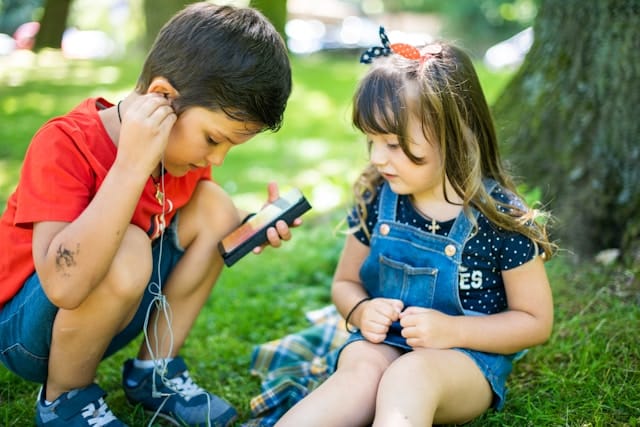
They are normally battery-operated and do not produce dangerous radiation such as smartphones. Many use AA or AAA batteries.
5. Built for Fun
Some models incorporate additional qualities as:
- Flashlights
- Call tones
- Voice changers
- Fun themes (superheroes, cartoon characters)
How Kids’ Walkie-Talkies Work
The walkie-talkies of kids work based on the FRS/PMR radio frequencies (license-free bands) by means of which the voice signals in one unit are sent to the other unit. When a child presses the PTT (Push-to-Talk) button, his or her voice is translated into a radio signal, which the other device gets nearly immediately.
The essential elements that make them practical and child-friendly are:
- The simplest of buttons (Power, Volume, Channel, PTT)
- Channels that do not require complicated tuning.
- Minimum power output 0.5W to 2W.
- Short range of communication is a characteristic of 1-4 miles, depending on the models.
Are Walkie-talkies Safe For Kids?
The walkie-talkies are also safe for children since they emit low radio frequencies that cannot harm their health, and they are cheap and easy to use since they have instant communication. Their rudimentary push-to-talk communication feature gives the children the ability to stay in touch both in play and, outings, or even in emergencies. Walkie-talkies may be used as a safe and entertaining means of communication among children with appropriate age-inspired models and supervision.
Benefits of Walkie-Talkies for Kids
Walkie-talkies are not toys because they enhance communication and learning.
1. Encourages Outdoor Play
Walkie-talkies will motivate children to play outside, go out in nature, and be active. They develop thrilling missions, minimize screen time, and enhance healthier outdoor activities in the presence of friends or siblings.
2. Boosts Teamwork and Social Skills
Children employ walkie-talkies to organize their activities, address problems, and collaborate. This develops collaboration, improves communication, and builds up social interaction when playing group games or making up fantasy adventures.
3. Enhances Creativity and Imagination
With walkie-talkies, children can pretend to be either explorers, police officers, firefighters, or secret agents. This promotes fantasy storytelling, creative games, and role-playing situations that are inexhaustible to them.
4. Improves Communication Skills
Walkie-talkies can assist children in speaking, giving instructions, and listening. The habits instil confidence, enhance verbal communication, and enhance how children communicate through play.
5. Helps Parents Monitor Kids Easily
Walkie-talkies enable parents to keep in touch with kids when they are on an adventure in the outdoors, camping, parks, or in the neighborhood playgrounds, and be sure that their kids are safe, that they can communicate fast, and that they can be secure at all times.
Why Are Walkie-Talkies Popular Among Kids?
Walkie-talkies are popular among children as they open imagination, adventure, and collaboration. A two-way radio is just an ordinary device, but it can be used to provide dramatic play and enable children to act as explorers, detectives, spies, adventurers, or team leaders.
Popular Uses Among Children
- Playing hide-and-seek
- Backyard adventures
- Camping or hiking trips
- Neighborhood games
- Maintaining contact during the outdoor games.
- Imitative games, like police, spy missions, or treasure hunts.
How to Choose the Safest Walkie-Talkie for Kids
Look for these features:
✔ Low-power FRS/PMR frequencies
✔ Clear sound with noise reduction
✔ Privacy codes (CTCSS/DCS)
✔ Durable ABS plastic
✔ Size suitable for small hands
✔ Lockable channels
✔ Long battery life
✔ SOS/emergency button
✔ BPA-free materials
Good kid-safe walkie-talkies are available in brands such as Retevis, Motorola T100, Obuby, Wishouse, as well as Selievee.
Safety Tips for Parents
These guidelines will make the use of walkie-talkies even safer:
- Established procedures regarding children’s distance.
- Educate children not to communicate with strangers on a channel.
- Privacy codes should be used where possible.
- Maintain a comfortable level of volume.
- Replace batteries safely
- Monitor young children’s usage.
What Age Is Best for Walkie-Talkies?
Ages 3–5
Ages 3–5 Walkie-talkies are expected to be very simple, with huge buttons, low volume, and simple functions. The lightweight toy models ensure that the young children can easily communicate and, at the same time, stay safe and comfortable.
Ages 5–8
Ages 5-Walkie-talkies have more features and channels as well as better sound quality. These models facilitate outdoor games, collaborative work, and exploration, and remain simple to use by the children.
Ages 8–12
Ages 8-12 Walkie-Talkies have better audio, stronger build quality,,y, and greater range. These modernized models can be used in outdoor activities, camping, and games that require quality and prolonged communication among older children.
Best Times for Kids to Use Walkie-Talkies
1. Camping Trips
The walkie-talkies ensure that the camping is safe and more fun as they assist the family in communication throughout the camp. Children are free to go around their neighborhoods without any fear, and parents can easily have direct communication without phone calls.
2. Backyard Games
Walkie-talkies also make the backyard games interesting in the sense that children can organise their play without shouts. They will promote teamwork, imagination, and proactive outdoor entertainment, and keep parents informed of the activities of the children.
3. Theme Parks
Walkie-talkies are useful in congested theme parks as they enable parents and children to keep in touch with each other. They enable quick updates, find it easy to find each other, and they provide a safer alternative to communication than phones.
4. Hiking
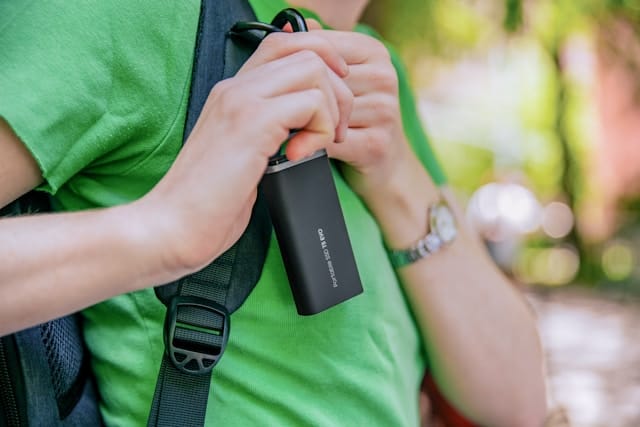
The use of walkie-talkies would also help during hiking when there is no cell phone. Children are able to be in touch with their parents, and outdoor adventure is much safer, structured, and a lot more fun.
5. Indoor Games
Walkie-talkies spice up indoor games such as the hide-and-seek game or spy games. They are more interactive and provide children with creativity and enabling them to communicate secretly and remain entertained within the house.
6. School Trips
Walkie-talkies are also applicable during school trips to enable teachers and students to interact in real-time. They enhance coordination, safety, enable rapid updates, and ease of group management, particularly in busy or noisy premises.
Conclusion
Walkie-talkies are a healthy, entertaining, and educational device for children. Being low-power, simple controls, and durable, they enable outdoor play, collaborative teamwork, and communication. Walkie-talkies make a good method to keep children in touch when the parents select age-related models and observe the safety measures.